


Butyl Acrylate
Custom-Made To Specifications
Purity inhibitors content impurities content furfural content free acid content
Rich Experience:Since established in 2004, we have focused on acrylate products for nearly 20 years and currently have more than 1,000 employees, including more than 100 R&D personnel.
Quality Assurance:We are one of the largest acrylic acid and acrylic ester manufacturers in China. The company has passed ISO9000 international quality certification and ISO 14000 environmental management system certification.
Professional Service:The service staff is online 24 hours a day, responding quickly and paying attention to each buyer's needs. We will try our best to meet the needs of most buyers, and there is no minimum order quantity.
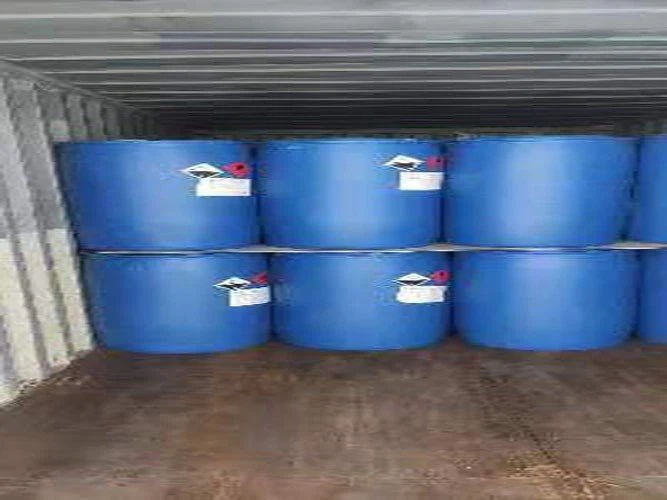
Fast Delivery:Our acrylic acid esters are sold all over the world. The normal delivery time after placing an order is 10-15 days. We can deliver the goods to customers quickly and safely, and have won praise from customers.
Butyl acrylate is an organic compound with the formula C4H9O2CCH=CH2. A colorless liquid, it is the butyl ester of acrylic acid. It is used commercially on a large scale as a precursor to poly(butyl acrylate). Especially as copolymers, such materials are used in paints, sealants, coatings, adhesives, fuel, textiles, plastics, and caulk.

Related Products


Products Description
| Appearance | Clear, colorless, volatile liquid |
| Density g/cm3 | 0.8956 |
| Freezing point°C | -64.4 |
| Boiling point (760mmHg)°C | 147.4 |
| Viscosity cp(20°C) | 0.856 |
| Flash point °C | 38(close cup)/43(open cup) |
| Explosion point with air: Floor limit vo1% | 1 |
| Explosion point with air: superior limit vo1% | 10 |

1.Butyl acrylate is a colorless liquid with a sharp odor.
2.Butyl acrylate is readily miscible with most organic solvents.
3.Butyl acrylate contains one of the following three inhibitors to prevent polymerization under recommended
storage conditions:
- Hydroquinone (HQ) CAS 123-31-95
- Monomethyl ether of hydroquinone (MEHQ) CAS 150-76-5
- Butylated hydroxytoluene (BHT) CAS 128-37-0
Products Description
| Color (APHA) | ≤10(Bulk) ≤20(Drum) |
| Purity % (WT) | ≥99.5 |
| Water % (WT) | ≤0.05 |
| Free acidity % (WT) | ≤0.01 |
| (Inhibitor) ppm (WT) | ≤50±5 |

Benefits of Using Butyl Acrylate
Adhesive and Coating Formulation:Its reactivity to ultraviolet (UV) light makes Butyl Acrylate suitable for UV-curable coatings. These coatings offer fast curing times and improved scratch resistance, making them valuable in industries like automotive and electronics.
UV-Curable Coatings
Butyl Acrylate is widely used in the production of adhesives and coatings. Its incorporation enhances the adhesive properties, flexibility, and durability of the final products.
Polymer Manufacturing
It serves as a key building block for the production of polymers, such as polybutyl acrylate and copolymers. These polymers find applications in coatings, textiles, and other industries.
Chemical Intermediary
Butyl Acrylate acts as a vital intermediary in the synthesis of other chemicals. It undergoes reactions to produce compounds like butyl methacrylate, which are used in the manufacture of paints, inks, and adhesives.
Applications of Butyl Acrylate
Butyl Acrylate (BA) is used in the production of organic glass and as a comonomer in the synthesis of acrylic dispersions used in adhesives, binders, impregnating compositions in the leather, printing, paint, varnish, pulp and paper, and other industries.
Acrylic & Water-borne dispersions
Water-borne industrial & architectural paints
Industrial & Architectural coatings
Varnishes
Textiles
Pulp & Paper
Paper & Leather coatings
Wood & Metal coatings
Adhesives
Purification Method of Crude Butyl Acrylate
Extraction
Using water as the extractant, the crude butyl acrylate product obtained from the esterification reaction is continuously extracted with the extraction agent; the organic acid catalyst in the crude butyl acrylate product enters the water phase, and the butyl acrylate and by-products enter the raffinate. The organic phase is separated and the raffinate organic phase is continuously fed into the static mixer.
Washing and Recovery
The reaction mixture material in step 2 enters the washing tower and is washed. The butyl acrylate and the by-products of removing organic acids in the reaction mixture material flow out from the upper part of the washing tower, and the salts produced by the neutralization reaction and dissolved in The impurities in the water flow out from the bottom of the washing tower, and the organic components in the bottom liquid are recovered.
Mixing and Neutralization
The liquid caustic soda continuously enters the static mixer, and is continuously and fully mixed with the raffinate organic phase to perform a neutralization reaction, remove organic acids in the by-products, and obtain a reaction mixture material with a pH of 9 to 12.
Separation and Purification
Butyl acrylate and the by-products of removing organic acids are distilled to remove the light components and heavy components to obtain butyl acrylate product.
Exposure and Health Effects
Routes of Exposure

Effects of Short-term Exposure
Inhalation Risk

Effects of Long-term or Repeated Exposure
Storage Precautions of Butyl Acrylate
- Butyl acrylate is stable under recommended storage conditions.
- Elevated temperatures can cause hazardous polymerization.
- Polymerization can be initiated by the absence of air, the presence of free radical initiators and peroxides, or high temperature.
- The presence of moisture can also accelerate polymerization rate.
- Butyl acrylate contains inhibitors to minimize polymerization under recommended storage conditions. Maintain inhibitor and dissolved oxygen level.
- Uninhibited monomer vapors can polymerize and plug relief devices.
- Avoid unintended contact with activated carbon or silica gel, which may cause polymerization. Avoid contact with clay-based absorbants, and with incompatible materials.

Company Honor
Shandong Kaitai is one of the largest acrylic acid and acrylic ester manufacturers in China. It has obtained the national "Three Systems" qualification certification and is the Shandong Provincial Acrylate Engineering Technology Research Center.

Our Factory
Shadong Kaitai currently has more than 1,000 employees, including more than 100 R&D personnel and 200 personnel with intermediate and senior professional titles.

Frequently Asked Questions
Hot Tags: butyl acrylate, China butyl acrylate suppliers, manufacturers, acrylate for hair products, acrylate for rotational molding, Butyl Acrylate for paints, acrylate for toner, acrylate for flexible polymers, Acrylic Acid for textile auxiliaries
Previous
Methyl AcrylateNext
Acrylic AcidYou Might Also Like


Send Inquiry