


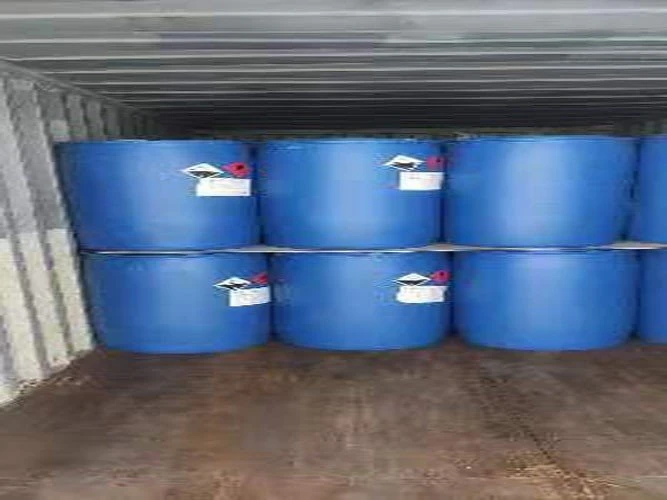


Acrylic Acid 80%
It is easy to store and transport with lower cost, and it is widely used in the fields of synthetic resins, water-absorbing materials, coatings, water treatment, and so forth.
1. Basic information
- Molecular formula: CH₂=CHCOOH (acrylic acid)
- CAS:79-10-7
- Appearance: colorless and transparent liquid, pungent odor
- pH: approximately 2.5 (strongly acidic)
- Polymerization inhibitor: MEHQ (4-methoxyphenol) 150–170 ppm, prevent self-polymerization
2. Physical Properties (at 20℃/25℃)
- Purity: 79.5–81.5 wt% (acrylic acid)
- Moisture: 18.5–20.5 wt%
- Chromaticity: APHA ≤ 10
- Density: 1.046–1.056 g/cm³ (20/4℃)
- Freezing point: approximately -5.5℃ (much lower than pure acrylic acid, which is 13℃, not easy to crystallization in winter)
- Boiling point: approximately 100–105℃
- Flash point: approximately 54℃ (closed cup), flammable
- Explosion limit: 2.4–8.0% (volume)
- Solubility: miscible with water, ethanol, and ether
- Viscosity: approximately 1.2 mPa·s (at 25℃)
- Vapor pressure: 3.8 hPa (20℃)
3. Chemical properties
- Easy to polymerize: rapid homopolymerization/copolymerization under heating, light exposure.
- Easy to esterify: Reaction with alcohols to form acrylic esters (such as methyl ester, ethyl ester, butyl ester, hydroxyethyl ester, etc.)
- Easy to forms salts: forms acrylate salts (sodium/potassium/ammonium salts) with alkalis
- Corrosivity: Strongly acidic, corrosive to metals, rubber, and skin and mucosa
4. Main usages
(1). Superabsorbent Polymer (SAP)
Applications: baby diapers, adult incontinence products, sanitary napkins, agricultural water retention agents
(2). Acrylate monomers - the foundation of coatings, adhesives, and plastics
- Synthesis of methyl acrylate/ethyl acrylate/butyl acrylate
- Downstream:
- Water-based/solvent-based acrylic resin: architectural coatings, automotive paints, wood coatings, industrial anti-corrosion paints
- Acrylic lotion: textile coating, paper coating, non-woven fabric, floor polishing, leather finishing
- Adhesives: pressure-sensitive adhesives, structural adhesives, packaging adhesives, electronic adhesives, medical adhesives
- Plastic modification: acrylic plastics, elastomers, synthetic rubbers
(3). Water treatment chemicals
- Polyacrylic acid (PAA)/polyacrylate sodium (PAAS):
- Scale inhibitor and dispersant: preventing scale formation in circulating water, boiler water, and reverse osmosis membranes
- Flocculant: Wastewater treatment, sludge dewatering, paper white water reuse
- Chelating agent: removes heavy metal ions and stabilizes water quality
(4). Textile and paper making
- Textile: warp sizing, fabric anti-crease finishing, waterproof coating, printing adhesive, dyeing auxiliary
- Paper making: paper strength agent, coating adhesive, pigment dispersant, sizing agent, enhancing paper strength, and water retention
(5). Other industrial applications
- Oil extraction: oil displacement agents to enhance oil recovery
- Daily chemical/pharmaceutical: toothpaste thickener, cosmetic emulsifier, drug carrier, orthopedic bone cement, food preservative
- Building materials: cement water reducer, ceramic additives, sealant, flooring materials
- Leather: tanning agent, finishing agent, hand feel modifier
5. Product Advantages
- Lower cost: Compared with 99.5% high-purity acrylic acid, 80% acrylic acid is more affordable and suitable for small and moderate trials.
- Safety for storage and transportation: low freezing point (-5.5℃), not easy to be crystalized in winter; moderate flash point, lower volatility
- Strong reaction adaptability: It can be directly used for aqueous polymerization, esterification, and salt formation without additional dehydration
- Good stability: containing standard polymerization inhibitor, it does not self-polymerize when stored at suitable room temperature for more than 6 months
6. Storage, Transportation, and Safety
- Packaging: 200L new HDPE drums, IBC drums, ISO TANK transportation
- Storage: Keep in a cool, ventilated, and dark place, at a temperature of 5–30℃. Keep away from sources of ignition, oxidizers, and alkalis
- Safety: High risk of corrosivity. Wear goggles, acid-resistant gloves, and protective clothing. If it splashes on the skin/eyes, immediately flush with plenty of water and seek medical attention
Hot Tags: acrylic acid 80%, China acrylic acid 80% suppliers, manufacturers, acrylate for conductive polymers, acrylate for heat curable polymers, acrylate for polymer curing, acrylate for rigid polymers, acrylate vendors, N-butyl acrylate
Previous
No InformationNext
Methyl AcrylateYou Might Also Like


Send Inquiry