

Polymers derived from N - butyl acrylate possess a wide array of unique properties that make them highly versatile and valuable in numerous industrial applications. As a leading supplier of N - butyl acrylate, I am well - versed in understanding these polymers and their characteristics.
Chemical Structure and Polymerization
N - butyl acrylate has the chemical formula C₇H₁₂O₂. Its structure consists of an acrylate functional group (CH₂=CHCOO - ) attached to a butyl group (C₄H₉). When it comes to polymerization, N - butyl acrylate can undergo free - radical polymerization. This process is initiated by free radicals, which can be generated through various methods such as thermal decomposition of initiators like azo compounds or peroxides.
During polymerization, the double bond in the acrylate group of N - butyl acrylate breaks, and the monomers link together to form long - chain polymers. The resulting polymers have a backbone composed of carbon - carbon single bonds, with the butyl ester side - chains attached at regular intervals. This structure significantly influences the physical and chemical properties of the polymers.
Physical Properties
Low Glass Transition Temperature (Tg)
One of the most notable properties of polymers made from N - butyl acrylate is their low glass transition temperature. The Tg is the temperature at which a polymer transitions from a hard, glassy state to a soft, rubbery state. N - butyl acrylate polymers typically have a Tg in the range of - 50°C to - 30°C. This low Tg gives the polymers excellent flexibility and elasticity at room temperature. They can easily deform under stress and return to their original shape, making them suitable for applications such as adhesives and coatings where flexibility is crucial.
Good Solubility
These polymers exhibit good solubility in a variety of organic solvents. They can dissolve in common solvents like toluene, ethyl acetate, and acetone. This solubility property is beneficial in coating and adhesive formulations. It allows for easy preparation of polymer solutions, which can be applied evenly on various substrates. For example, in the production of solvent - based coatings, the solubility of N - butyl acrylate polymers ensures that the coating can be smoothly applied to surfaces, providing a uniform and high - quality finish.
Low Surface Tension
Polymers of N - butyl acrylate have relatively low surface tension. This property enables them to spread easily on surfaces, enhancing their wetting ability. In coating applications, low surface tension allows the polymer to form a thin, continuous film on the substrate, improving the adhesion and coverage of the coating. It also helps in reducing the formation of defects such as pinholes and craters, resulting in a more aesthetically pleasing and functional coating.
Chemical Properties
Resistance to Hydrolysis
N - butyl acrylate polymers show a certain degree of resistance to hydrolysis. Hydrolysis is a chemical reaction in which water breaks down the polymer chains. The butyl ester groups in the polymer structure provide some protection against water - induced degradation. However, the resistance can be affected by factors such as pH, temperature, and the presence of catalysts. In general, under normal environmental conditions, these polymers can maintain their integrity for a reasonable period, making them suitable for outdoor applications where exposure to moisture is inevitable.
Reactivity with Other Monomers
N - butyl acrylate can copolymerize with a wide range of other monomers. For example, it can be copolymerized with Methyl Acrylate to adjust the properties of the resulting copolymer. By varying the ratio of N - butyl acrylate to methyl acrylate, the glass transition temperature, hardness, and adhesion properties of the copolymer can be fine - tuned. Copolymerization with Acrylic Acid can introduce carboxylic acid groups into the polymer structure, which can enhance the adhesion of the polymer to polar substrates and also provide sites for further chemical reactions such as cross - linking.
Mechanical Properties
Tensile Strength and Elongation
The polymers made from N - butyl acrylate generally have moderate tensile strength and high elongation at break. Tensile strength refers to the maximum stress a material can withstand before breaking under tension, while elongation at break is the percentage increase in length of the material before it fractures. These polymers can typically achieve an elongation at break of several hundred percent, indicating their high elasticity. The tensile strength can be improved through cross - linking or copolymerization with other monomers. For example, cross - linking can form a three - dimensional network structure, which restricts the movement of polymer chains and increases the strength of the material.
Abrasion Resistance
Although the abrasion resistance of pure N - butyl acrylate polymers is not extremely high, it can be enhanced through appropriate formulation and modification. For instance, adding fillers or reinforcing agents can improve the ability of the polymer to withstand wear and tear. In applications such as floor coatings or automotive interior coatings, improved abrasion resistance is essential to ensure the durability of the coating over time.
Applications
Adhesives
The flexibility, low Tg, and good wetting properties of N - butyl acrylate polymers make them ideal for adhesive applications. They can adhere well to a variety of substrates, including plastics, metals, and glass. Pressure - sensitive adhesives (PSAs) made from N - butyl acrylate polymers are widely used in labels, tapes, and stickers. These adhesives can be easily applied and removed without leaving residue, and they maintain their adhesive properties over a wide range of temperatures.
Coatings
In the coatings industry, N - butyl acrylate polymers are used in both solvent - based and water - based coatings. Solvent - based coatings offer excellent gloss and durability, while water - based coatings are more environmentally friendly. These polymers can provide coatings with good flexibility, weather resistance, and chemical resistance. They are used in automotive coatings, architectural coatings, and industrial coatings to protect and decorate surfaces.
Textile Finishing
N - butyl acrylate polymers are also used in textile finishing processes. They can improve the softness, elasticity, and wrinkle resistance of fabrics. By applying a polymer coating to the textile, the fabric can gain additional properties such as water repellency and stain resistance. This makes the treated textiles more comfortable to wear and easier to maintain.
Conclusion
As a supplier of N - butyl acrylate, I am aware of the significant potential of polymers made from this monomer. Their unique combination of physical, chemical, and mechanical properties makes them suitable for a diverse range of applications. Whether it is in adhesives, coatings, or textile finishing, these polymers play a crucial role in enhancing the performance and functionality of various products.

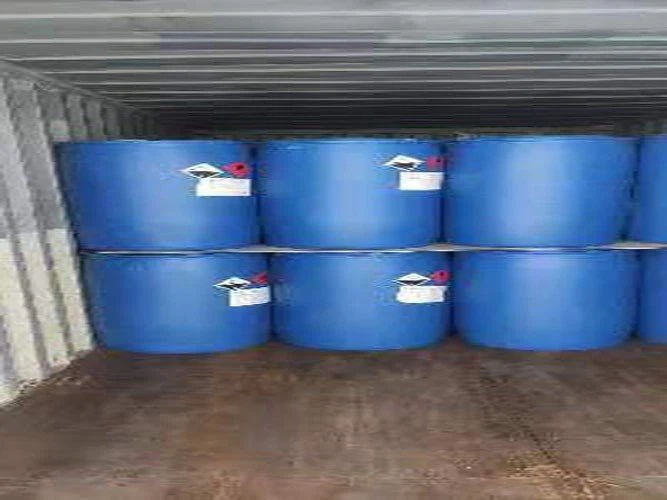
If you are interested in exploring the possibilities of using N - butyl acrylate polymers in your products or have any questions regarding their properties and applications, I encourage you to reach out for a procurement discussion. We can work together to find the best solutions tailored to your specific needs.
References
- Odian, G. Principles of Polymerization. John Wiley & Sons, 2004.
- Seymour, R. B., & Carraher, C. E. Polymer Chemistry. Marcel Dekker, 2003.
- Billmeyer, F. W. Textbook of Polymer Science. John Wiley & Sons, 1984.


