

Hey there! As an acetonitrile supplier, I've been getting a lot of questions lately about how acetonitrile behaves under high pressure. So, I thought I'd take a deep dive into this topic and share what I've learned.
First off, let's talk a bit about acetonitrile. Acetonitrile, with the chemical formula CH₃CN, is a colorless liquid that's widely used in various industries. It's a key solvent in organic synthesis, chromatography, and electrochemistry. You can find more about it on our Acetonitrile page.
Now, onto the high - pressure stuff. When we talk about high pressure, we're usually referring to pressures well above normal atmospheric pressure (which is about 1 atm or 101.3 kPa). Under high pressure, acetonitrile's physical and chemical properties change in some pretty interesting ways.
Physical Properties Changes
Density
One of the most obvious changes is in its density. As pressure increases, the molecules of acetonitrile are forced closer together. This results in an increase in density. Think of it like squeezing a sponge; the more pressure you apply, the more tightly packed the material becomes. In the case of acetonitrile, this increase in density can have implications for processes where volume and mass relationships are important, like in certain types of chemical reactions or in the design of high - pressure equipment.
Viscosity
Viscosity is another property that gets affected. Under high pressure, the viscosity of acetonitrile tends to increase. This means that it becomes thicker and flows less easily. It's similar to how honey becomes more viscous when it's cold. In industrial applications, this change in viscosity can impact things like pumping systems. If the viscosity is too high, it might require more energy to move the acetonitrile through pipes or other equipment.
Boiling Point
The boiling point of acetonitrile also goes up under high pressure. At normal atmospheric pressure, acetonitrile boils at around 81.6 °C. But as the pressure increases, the energy required for the molecules to escape from the liquid phase and turn into vapor becomes greater. So, the boiling point rises. This is important in processes where distillation or evaporation of acetonitrile is involved. For example, in a high - pressure distillation column, the operating conditions need to be adjusted to account for this change in boiling point.
Chemical Reactivity Changes
Reaction Rates
High pressure can significantly affect the rates of chemical reactions involving acetonitrile. In some cases, the increased pressure can speed up reactions. This is because the closer proximity of the molecules due to the pressure makes it more likely for them to collide and react. However, it's not always a straightforward relationship. Some reactions might be inhibited by high pressure if the transition state of the reaction is less stable under those conditions.
Reaction Pathways
The reaction pathways can also change. Acetonitrile might participate in different reactions or form different products under high pressure compared to normal conditions. For instance, in some organic synthesis reactions, new reaction intermediates or final products might be formed due to the altered chemical environment created by high pressure. This can open up new possibilities for the synthesis of novel compounds.
Comparison with Acrylonitrile
It's interesting to compare how acetonitrile behaves under high pressure with Acrylonitrile. Acrylonitrile, with the formula CH₂=CHCN, has a double bond in its structure, which gives it different chemical and physical properties compared to acetonitrile.
Under high pressure, acrylonitrile also experiences changes in density, viscosity, and boiling point similar to acetonitrile. However, its chemical reactivity is quite different due to the presence of the double bond. The double bond in acrylonitrile makes it more reactive in addition reactions. For example, it can undergo polymerization reactions more readily under high pressure compared to acetonitrile. You can learn more about acrylonitrile on our Acrylonitrile page.
Industrial Applications
In the industrial world, understanding how acetonitrile behaves under high pressure is crucial. In the pharmaceutical industry, for example, high - pressure processes are sometimes used in the synthesis of certain drugs. Acetonitrile, as a common solvent, needs to be well - understood in these high - pressure environments to ensure the efficiency and safety of the manufacturing process.
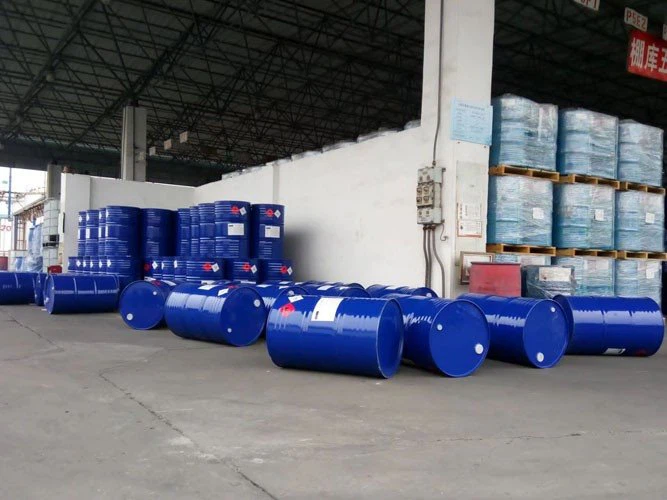

In the petrochemical industry, high - pressure reactions involving acetonitrile can be used to produce various chemicals. The ability to control the reaction conditions, including pressure, allows for the production of specific products with desired properties.
Safety Considerations
Working with acetonitrile under high pressure comes with its own set of safety risks. The increased pressure means that there's a greater potential for equipment failure, which could lead to leaks or explosions. Acetonitrile is also toxic, so any leaks need to be dealt with immediately to prevent exposure to workers. Proper safety protocols, including the use of pressure - rated equipment, safety valves, and personal protective equipment, are essential when handling acetonitrile under high pressure.
Conclusion
So, there you have it! Acetonitrile behaves in some pretty fascinating ways under high pressure. Its physical properties like density, viscosity, and boiling point change, and its chemical reactivity can be significantly altered. Comparing it with acrylonitrile shows the differences in behavior based on their molecular structures.
If you're in an industry that uses acetonitrile and you're dealing with high - pressure processes, understanding these behaviors is crucial for optimizing your operations and ensuring safety. And if you're looking for a reliable acetonitrile supplier, we're here to help. Whether you need a small amount for research or a large quantity for industrial production, we can provide high - quality acetonitrile. Feel free to reach out to us to start a conversation about your procurement needs.
References
- Atkins, P., & de Paula, J. (2014). Physical Chemistry. Oxford University Press.
- Vogel, A. I. (1989). Vogel's Textbook of Practical Organic Chemistry. Pearson Education.
